
What Is UV Degradation?
Ultraviolet radiation is a form of energy emitted by the sun. While invisible to the human eye, UV rays continuously interact with exposed surfaces, including automotive paint.
Modern automotive paint systems consist of several layers:
- Clear coat
- Base color coat
- Primer
- Metal or composite substrate
The clear coat is designed to provide gloss and protection, but over time UV radiation gradually breaks down the chemical bonds within this layer. This process is known as UV degradation. As the protective properties of the clear coat diminish, the paint beneath becomes increasingly vulnerable to fading, oxidation, and environmental contamination.
How UV Radiation Damages Vehicle Paint
The effects of UV exposure do not happen overnight. Instead, damage accumulates over months and years.
Loss of Gloss
One of the earliest signs of UV degradation is reduced surface gloss. The paint no longer reflects light evenly, causing the finish to appear dull and aged.
Color Fading
Dark colors such as black, blue, and red are particularly susceptible to fading. UV radiation slowly breaks down pigments within the paint, causing visible changes in color intensity.
Oxidation
As the clear coat deteriorates, oxygen begins reacting more aggressively with the paint surface. This oxidation creates a chalky, faded appearance that cannot always be corrected through polishing.
Clear Coat Failure
In severe cases, prolonged UV exposure can lead to cracking, peeling, or complete failure of the clear coat. Once this occurs, repainting is often the only solution.
Why UV Damage Is More Severe in the GCC
Vehicle manufacturers design their paint systems to withstand normal environmental conditions. However, the GCC presents unique challenges.
Factors that accelerate UV degradation include:
- Year-round high UV index
- Extended outdoor parking
- Ambient temperatures exceeding 45°C
- Intense solar radiation
- Reflection from sand, concrete, and glass surfaces
These conditions place significantly greater stress on vehicle paint compared to many regions in Europe or North America. A vehicle parked outdoors in this region can experience substantially higher cumulative UV exposure than a similar vehicle in a milder climate.
Common Signs of UV Degradation
Vehicle owners should regularly inspect their paintwork for:
- Loss of gloss
- Uneven color appearance
- Fading on horizontal panels
- Surface oxidation
- Increased roughness of the paint surface
- Clear coat haze or cloudiness
The bonnet, roof, boot lid, and upper sections of doors are typically the first areas to show signs of UV damage because they receive the highest solar exposure.
Can Ceramic Coatings Prevent UV Damage?
Ceramic coatings can help reduce environmental contamination and provide additional UV resistance. However, they are extremely thin coatings measured in microns and are not designed to absorb significant physical or long-term UV abuse.
While ceramic coatings contribute to paint preservation, they should not be considered a complete substitute for a dedicated physical protection layer.
How Paint Protection Film Helps
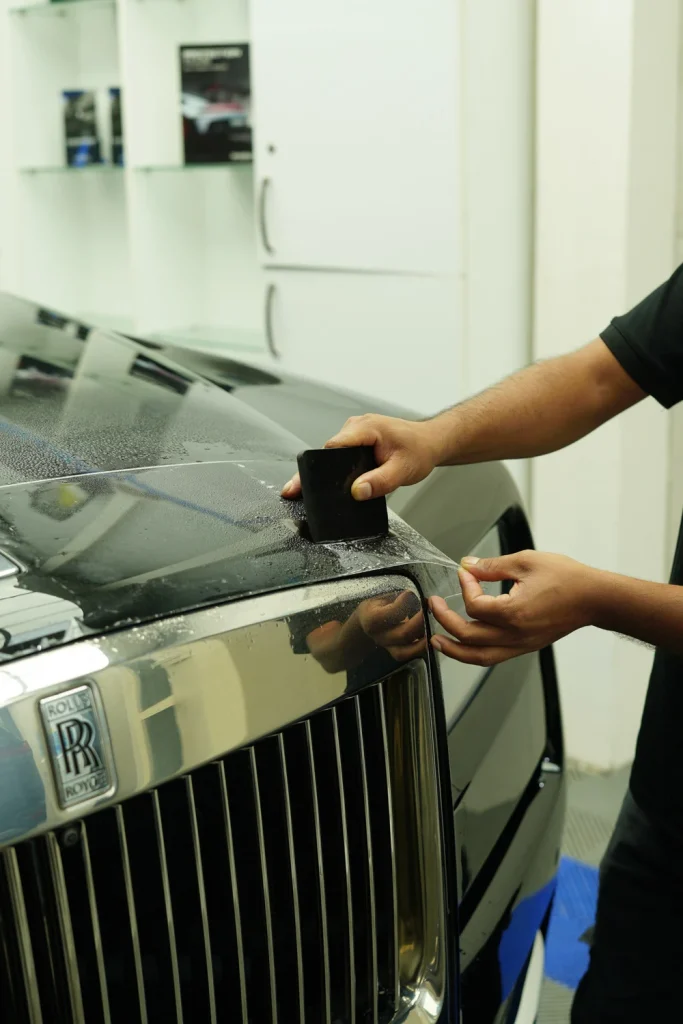
Paint Protection Film (PPF) acts as a sacrificial barrier between the environment and the vehicle’s paint.
High-quality TPU-based PPF can help:
- Reduce UV penetration to painted surfaces
- Protect against oxidation
- Maintain paint gloss for longer periods
- Prevent premature fading
- Preserve factory paint condition
- Improve long-term resale value
Rather than allowing the vehicle’s original clear coat to absorb years of environmental exposure, the film itself becomes the protective layer.
The Importance of Film Quality
Not all paint protection films offer the same level of UV resistance.
Lower-quality films may themselves become yellow, brittle, or degrade when subjected to prolonged sunlight exposure. This is why advanced TPU formulations, high-performance topcoats, and extensive weathering testing are critical factors when selecting a PPF.
Films engineered for high-temperature climates are specifically designed to maintain optical clarity, flexibility, and durability under prolonged solar exposure.
Protecting Your Investment
Vehicle paint is constantly under attack from environmental factors, but UV radiation remains one of the most persistent and damaging threats. Unlike stone chips or scratches, UV degradation occurs gradually and often goes unnoticed until visible damage has already occurred.
For vehicle owners in the GCC, protecting against UV exposure is not simply about maintaining appearance, it’s about preserving the factory finish, reducing future correction costs, and maintaining the long-term value of the vehicle. As temperatures continue to rise and vehicles spend countless hours under intense sunlight, investing in proven paint protection solutions has become more important than ever.