
What Is a Ceramic Coating?
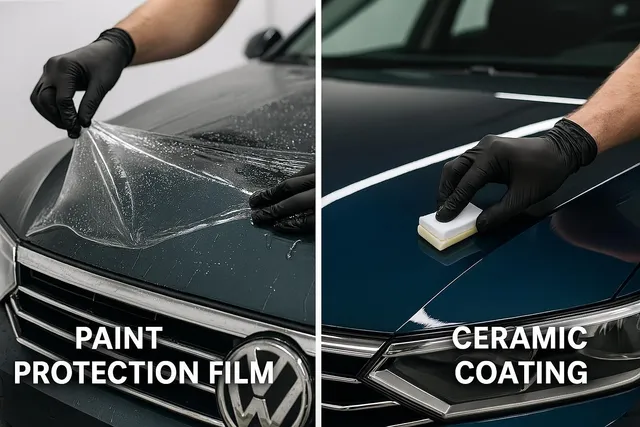
A ceramic coating is a liquid-applied protective layer that chemically bonds to the vehicle’s paint.
Once cured, it creates a highly durable surface that offers:
- Enhanced gloss
- Hydrophobic properties
- Easier cleaning
- Resistance to chemical contaminants
- Improved stain resistance
Ceramic coatings are measured in microns and are essentially invisible once applied.
What Is Paint Protection Film?
Paint Protection Film is a transparent polyurethane film physically installed over painted surfaces. Unlike ceramic coatings, PPF provides a sacrificial barrier between the paint and external hazards.
PPF helps protect against:
- Stone chips
- Road debris
- Minor scratches
- Sand abrasion
- Insect stains
- UV exposure
Many modern films also feature self-healing topcoats that help eliminate light surface scratches when exposed to heat.
The Biggest Difference: Physical Protection
The most important distinction is simple:
Ceramic coatings protect against contamination.
Paint Protection Film protects against impact.
A ceramic coating cannot stop a stone chip traveling at highway speeds.
A PPF can significantly reduce or prevent that damage.
Comparing Ceramic Coating and PPF
| Feature | Ceramic Coating | Paint Protection Film |
| Stone Chip Protection | No | Yes |
| Scratch Resistance | Limited | High |
| Self-Healing Properties | No | Yes (on many films) |
| Hydrophobic Effect | Excellent | Good to Excellent |
| UV Protection | Moderate | Excellent |
| Physical Barrier | No | Yes |
| Paint Preservation | Good | Excellent |
| Installation Cost | Lower | Higher |
Which Product Lasts Longer?
The lifespan of both products depends on quality, maintenance, and environmental exposure.
Premium ceramic coatings typically last several years.
Premium PPF systems can provide long-term protection while preserving the original factory finish beneath the film.
Can You Use Both Together?
Yes.
In fact, many enthusiasts and luxury vehicle owners combine both technologies.
The process usually involves:
- Installing PPF.
- Applying a ceramic coating over the film.
This combination provides:
- Physical impact protection from PPF.
- Enhanced water repellency from ceramic coating.
- Easier maintenance.
- Improved appearance.
Many consider this to be the highest level of paint protection currently available.
Which Option Should You Choose?
Choose Ceramic Coating if your primary goal is:
- Easier maintenance
- Improved gloss
- Water repellency
- Protection from environmental contamination
Choose Paint Protection Film if your priority is:
- Stone chip resistance
- Scratch protection
- Preserving factory paint
- Long-term vehicle value
For owners seeking maximum protection, combining both solutions often delivers the most comprehensive result.
Final Thoughts
Ceramic coatings and Paint Protection Film are not competing technologies, they solve different problems.
Ceramic coating enhances surface performance and maintenance.
Paint Protection Film provides a physical barrier against real-world damage. Understanding this distinction allows vehicle owners to make informed decisions and select the protection strategy that best suits their driving habits, environment, and long-term ownership goals.